
01
Direction
The visual language uses fractured film layers and strong negative space to create tension between distraction and control. One cobalt line becomes the recurring point of orientation.
01 / Film & Motion
A story-led editing study about turning visual overload into one deliberate line of attention.
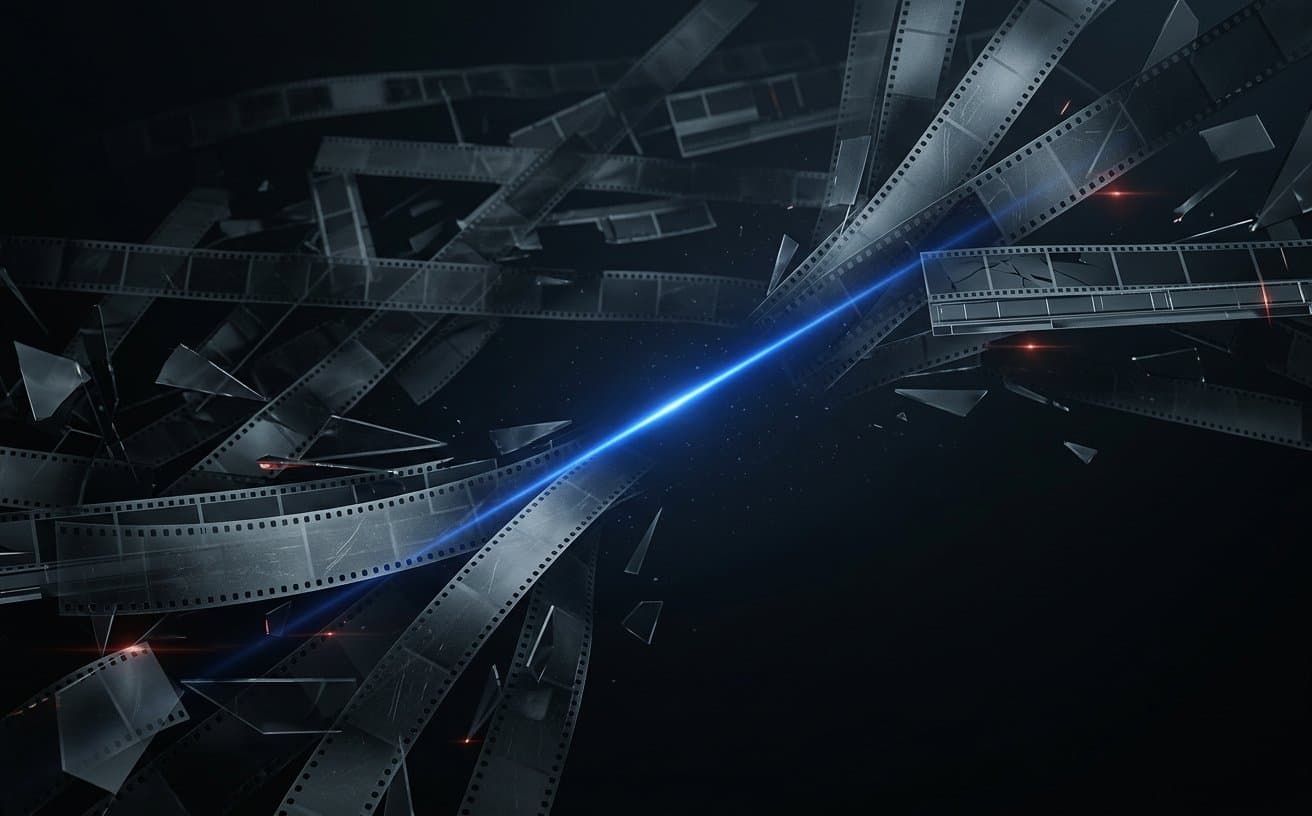 Self-initiated direction study
Creative premise
The concept begins with fragments: competing frames, interrupted pathways, and visual noise. The central idea is not to remove complexity, but to direct it toward a single readable signal.
From question to direction
The visual language uses fractured film layers and strong negative space to create tension between distraction and control. One cobalt line becomes the recurring point of orientation.
Frame density, scale, and contrast are treated as editorial tools. Quiet holds create room around compressed passages, while graphic markers help the eye understand where the story is moving.
The imagined sequence would move from scattered sound and rapid fragments toward a calmer, resolved rhythm—allowing the finish to feel earned rather than simply decorative.
Frame study
These crops examine composition and material within the same original concept artwork; they are not separate delivered assets.
What this concept explores
Narrative hierarchy inside information-rich edits
Pacing built through contrast rather than constant speed
A graphic motif that can connect picture and sound
Cinematic finishing that preserves clarity on small screens
Connected craft
Build an original direction
Share the audience, context, and rough idea. We will identify the right mix of story, design, motion, and technology from there.